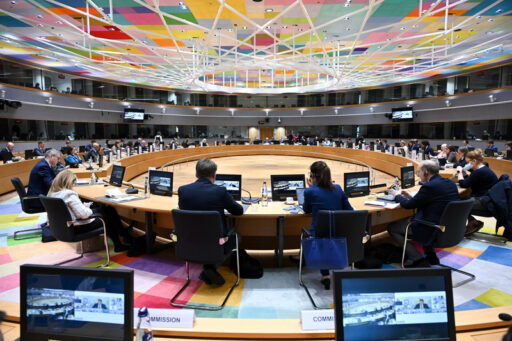
Discussions within the Council of the European Union on the GDPR-related elements of the Digital Omnibus have entered a quieter phase following the last exchange at the Antici Group (Simplification) on 27 February 2026. That meeting marked the first structured opportunity for Member States to react to the Presidency text on the Commission’s proposed adjustments to the General Data Protection Regulation (GDPR). Since then, the file has not returned to the agenda of the Antici Group (Simplification).
This pause is notable not because the Antici Group (Simplification) has been inactive—it continues to meet regularly on other Omnibus files—but because of the absence of any follow-up specifically on GDPR-related changes.
One key explanation lies in the decision, following the February meeting, to invite Member States to submit written comments on the proposed GDPR amendments by 18 March, 2026. This effectively positioned March as a period of written consultation rather than in-person negotiation. For a file of this sensitivity, such an approach is understandable. GDPR remains a cornerstone of the EU’s regulatory framework, and even targeted “simplification” measures can have wider implications for enforcement, accountability, and legal certainty. Written submissions allow delegations to articulate more carefully calibrated positions, including internal red lines, without the immediacy of negotiations.
At the same time, the reliance on written comments suggests that underlying divergences may be more pronounced than initially anticipated. While some Member States are likely supportive of reducing administrative burdens and clarifying obligations, particularly for smaller organisations, others remain cautious about any changes that could weaken established accountability mechanisms or introduce interpretative ambiguity. These tensions are not easily resolved and may explain why the Presidency has not yet reconvened the Antici Group (Simplification) to advance discussions.
The period since the deadline for written comments is therefore particularly telling. The absence of a prompt return to formal technical discussions may indicate that the written feedback revealed a broad spectrum of views, requiring further bilateral engagement before a collective exchange can be productive. In this sense, the current lull appears less a pause in substance than a phase of quieter political calibration behind the scenes.
Nonetheless, the gap carries implications. Procedurally, it reduces visibility for stakeholders attempting to track the Council’s position. Substantively, it risks slowing momentum on what were presented as targeted and technical adjustments. The longer discussions remain outside a structured forum, the greater the risk that positions harden rather than converge.
Looking ahead, there are early indications of when discussions may resume. Privacy Next understands, based on local sources, that the next meeting of the Antici Group (Simplification) could take place in late April, with 24 or 27 April mentioned as possible dates. If confirmed, this would provide the first opportunity to test how far Member States have moved following the written consultation phase and whether a path toward compromise is emerging.
Until then, the extended gap since 27 February stands out. While partly explained by the shift to written input, it also underscores the political sensitivity of even limited changes to GDPR, and the challenges the Council faces in translating a simplification agenda into concrete progress.
06 April, 2026

Square de Meeûs 18
1050 Brussels | Belgium
info@privacynext.eu

Copyrights © 2026 PrivacyNext.eu | Privacy Policy | Cookie Policy Webdesign & Development by ALYS